1 / 4
食品与文字创意交互海报
MMrLarus原创
发布者:Radishon[BRAND]: {brand name}
[PRODUCT]: {food / drink}
[HEADLINE]: {short bold word}
[INTERACTION]: {thickness transition / absorption reveal / thermal refraction / diffusion field}
[ACCENT COLOR]: {main typography color}
[DETAILS]: {ingredients / short copy / hours / address}
Create a 9:16 vertical food editorial poster combining highly realistic food photography with bold, professionally designed typography.
Use a warm cream or ivory background, subtle paper texture, realistic materials, natural lighting and a clean editorial layout.
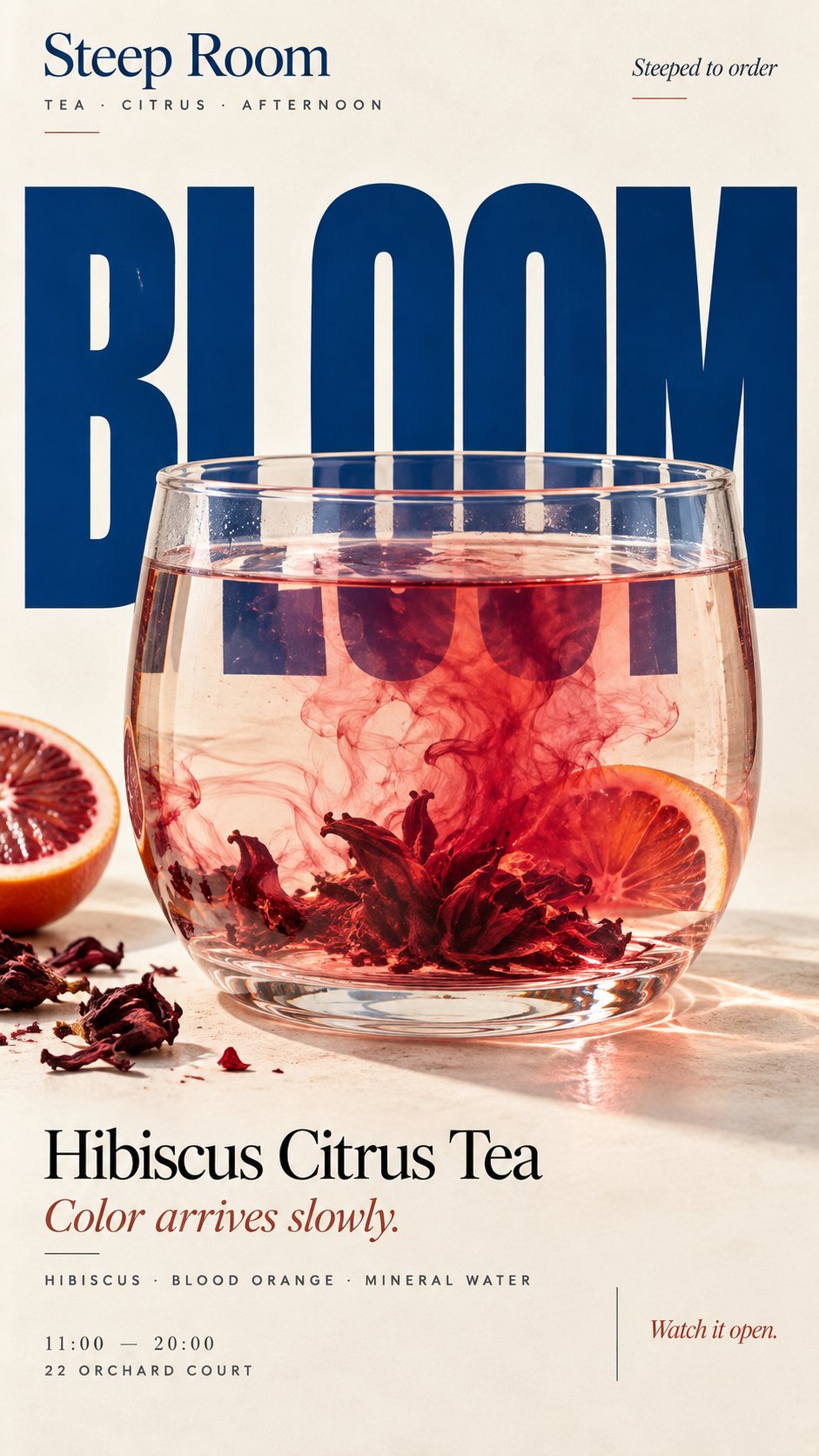
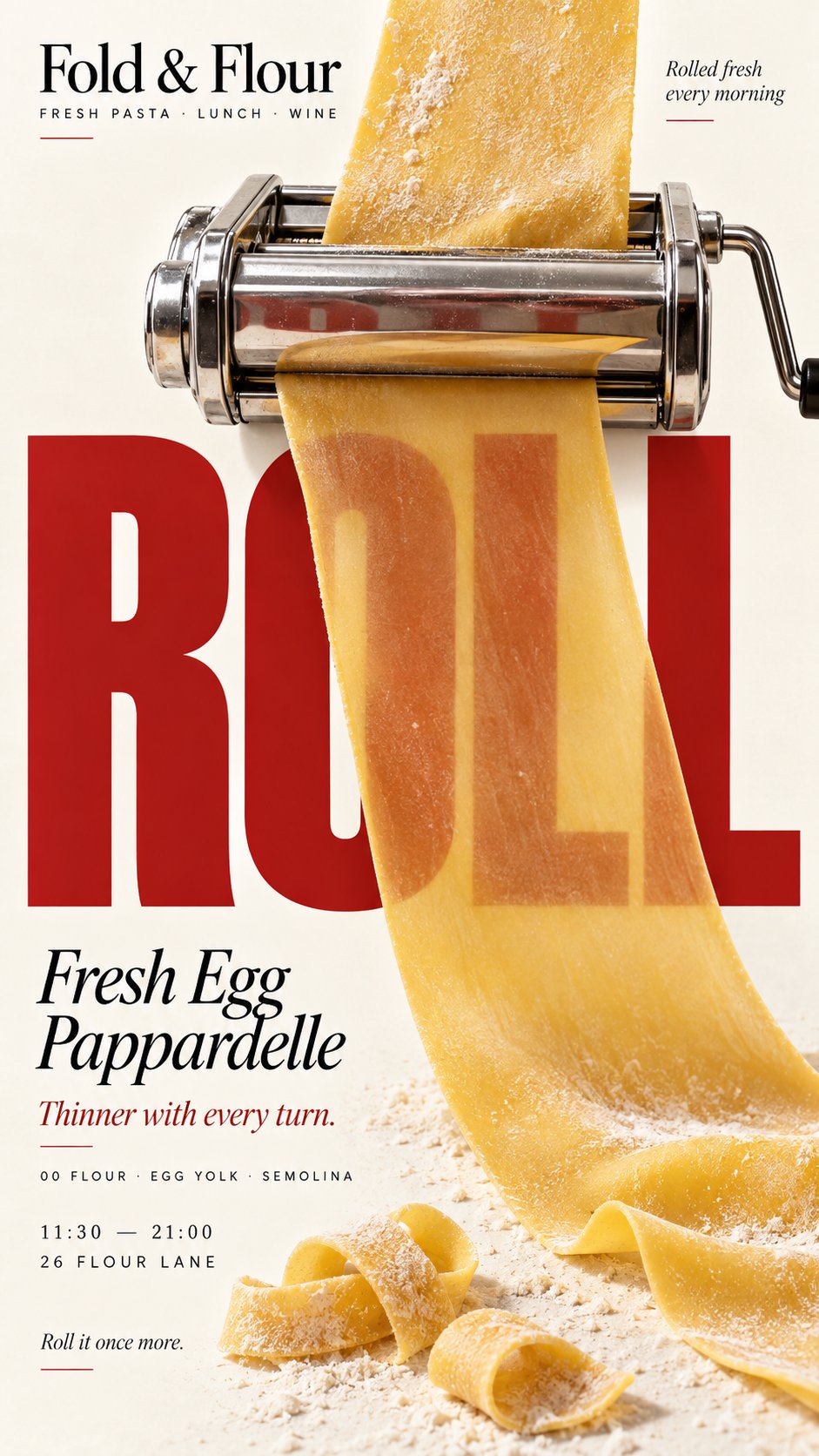
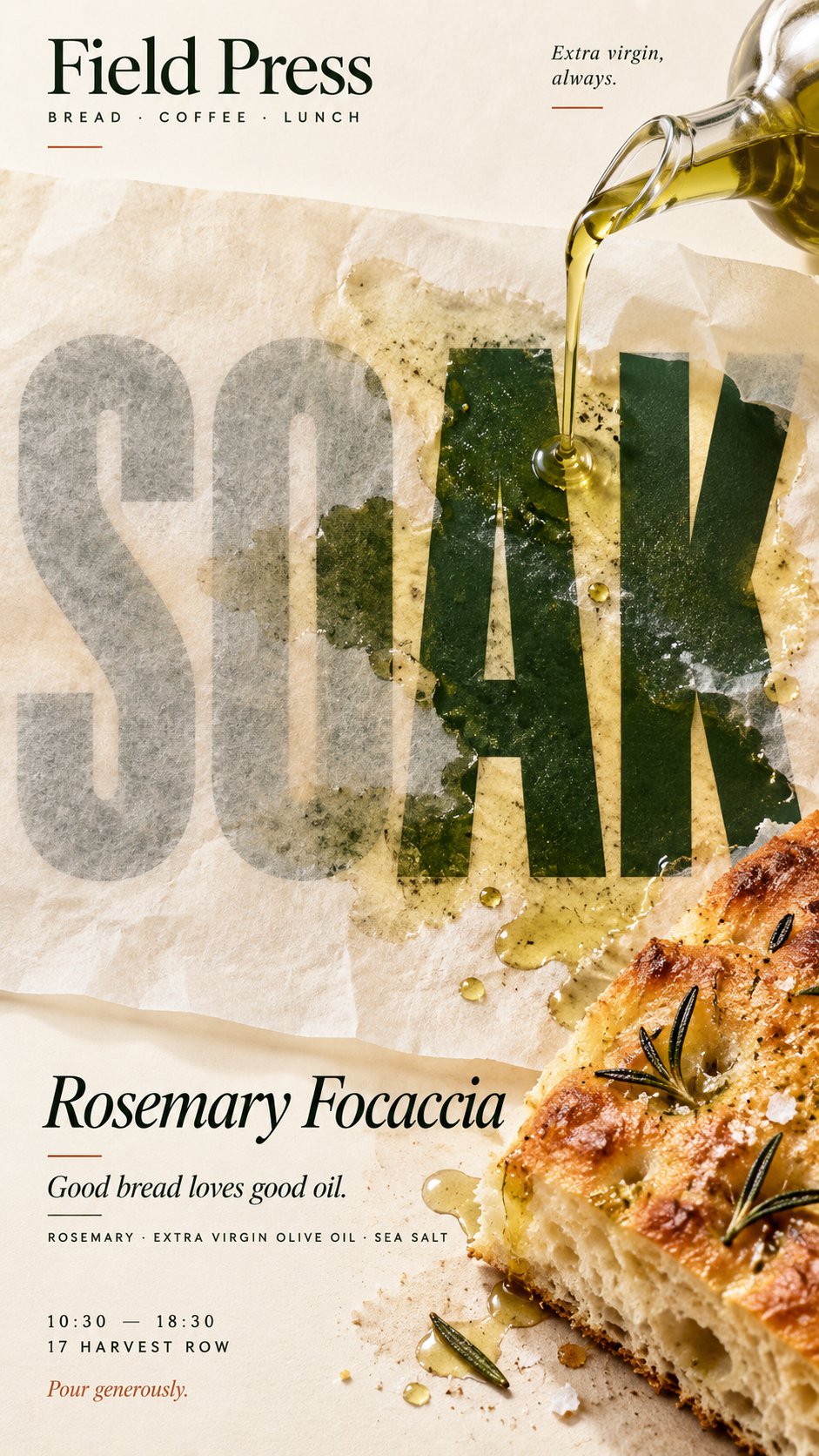
Keep [HEADLINE] completely intact, sharp and normally designed. The food must remain a separate real object and physically change only how the typography is seen according to [INTERACTION].
For "thickness transition," let food become physically thinner through a real process such as rolling, revealing more of the typography behind it as thickness decreases.
For "absorption reveal," let oil or another food liquid soak into a real material such as paper, increasing its transparency and gradually revealing the hidden typography underneath.
For "thermal refraction," use real heat rising from hot food to bend and slightly shift only the typography seen through the hot-air zone while keeping the rest perfectly sharp.
For "diffusion field," let a real ingredient spread naturally through liquid, creating changing color, density and visibility across the typography behind it.
Make [HEADLINE] large, simple and readable at thumbnail size. The physical interaction should be understandable within the first second.
Use [ACCENT COLOR] with cream, natural food colors and dark neutrals. Add only a few meaningful details such as [BRAND], product name, ingredients, one short line of copy, opening hours or address.
Keep props minimal. Avoid food-shaped letters, digital masks, fake blur, CGI materials, generic 3D type, random distortion, numbered labels, 01/02, Vol. or sparkles.
The final poster should work as a stop-scroll image: one bold headline, one clear physical food process, and one surprising but believable change in how the typography is seen.
Keep the typography professionally designed and untouched — let the real food process change the view.