1 / 4
黑白编辑卡通角色风格化设计
aai_suxiaole原创
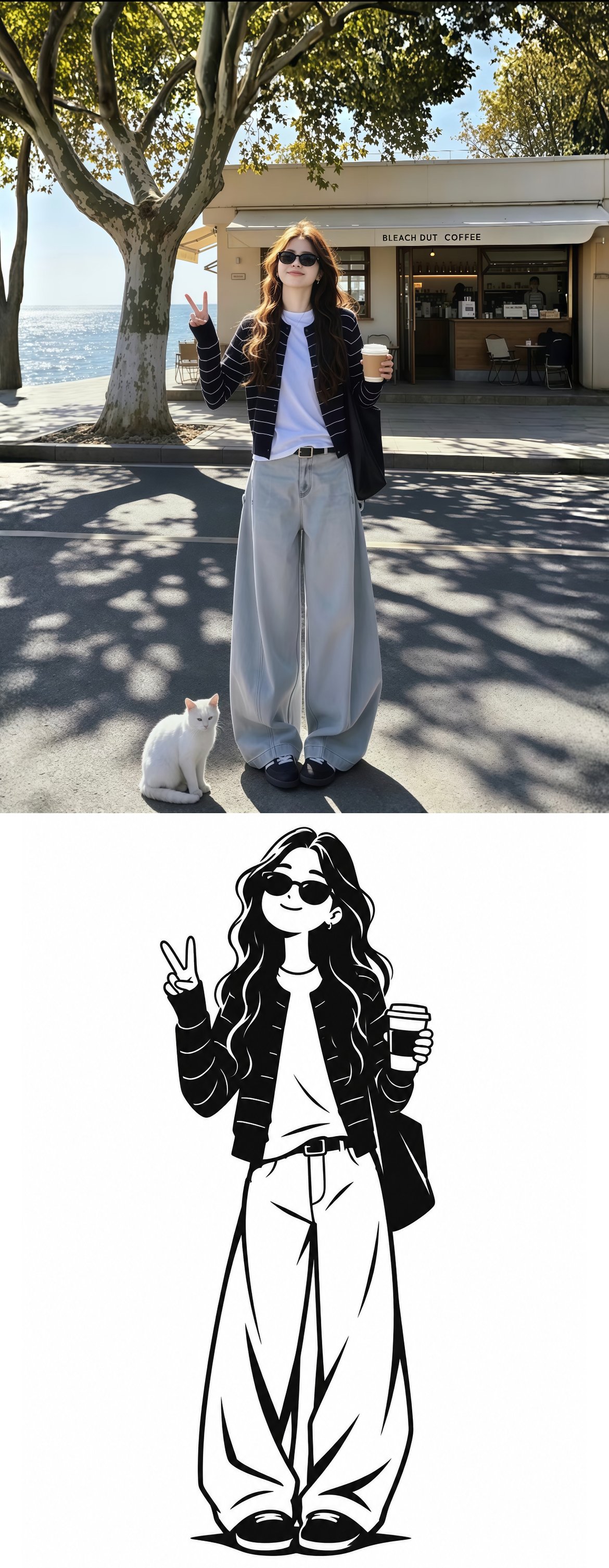
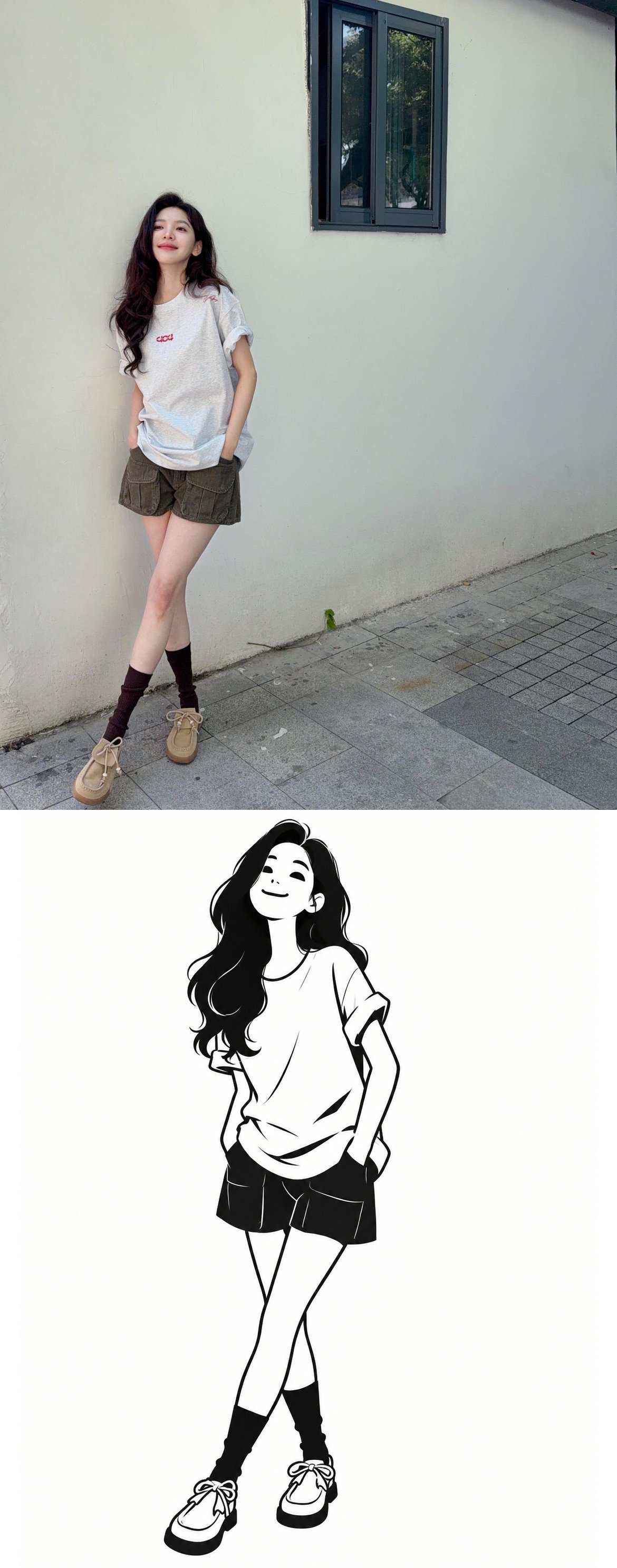
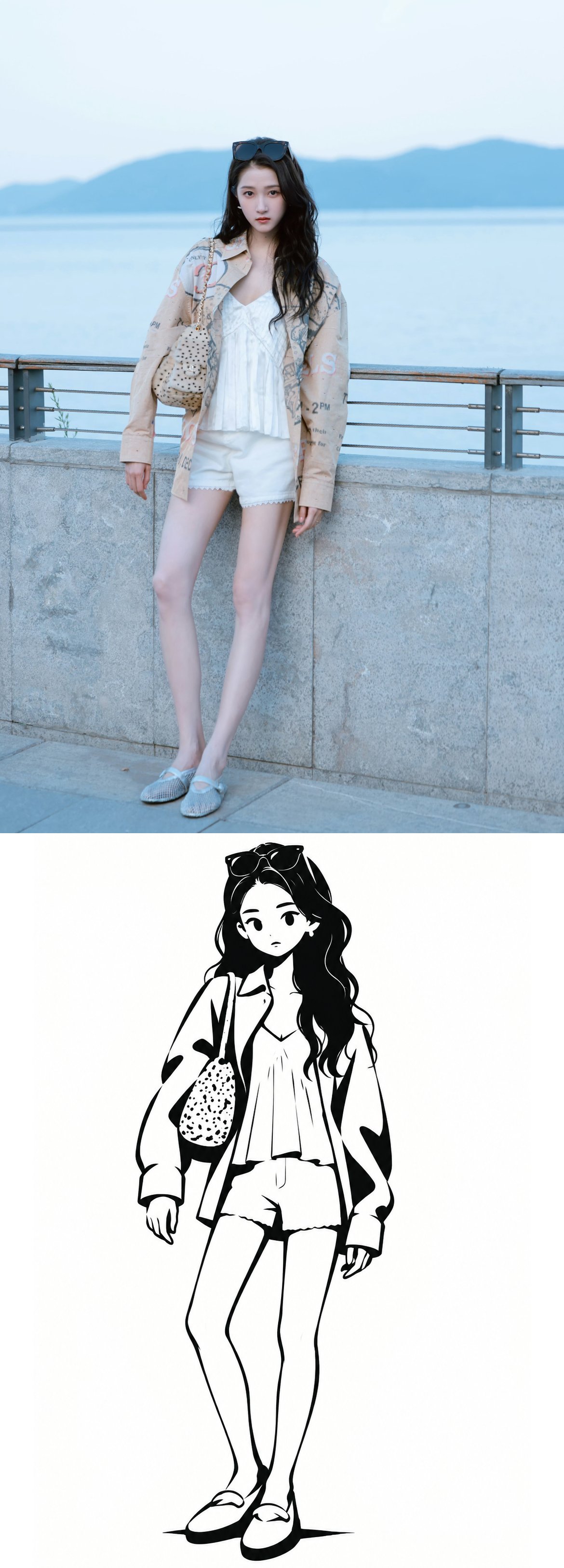
发布者:RadishonUse case: style-transfer
Asset type: prompt-development preview
The attached photograph is the sole source for the subject.
Redesign the person as a strongly stylized black-and-white editorial cartoon character. Create a fresh character design loosely mapped from the person, not a traced portrait, realistic likeness study, fashion sketch, pencil drawing, or detailed line-art conversion.
IDENTITY AND SOURCE CONTENT
Preserve only the broad, high-value identity anchors visible in the source:
- The main hairstyle silhouette.
- The approximate face shape.
- Apparent age and gender presentation.
- The general expression.
- The overall impression of the person's body build.
- Distinctive eyewear or facial hair when present.
- Broad clothing categories.
- Existing accessories and props.
- The basic pose and gesture.
The output should feel recognizably inspired by the person without reproducing their exact photographic appearance.
Do not preserve:
- Exact facial measurements.
- Precise facial anatomy.
- Exact body proportions.
- Garment construction details.
- Surface textures.
- Photographic anatomy.
- Realistic lighting and shadows.
- Small photographic details.
Simplify the person into a designed cartoon character rather than converting the photograph into line art.
VISUAL STYLE
Create a bold, contemporary black-and-white editorial cartoon illustration.
Use:
- Pure solid-black ink.
- Clean paper white.
- A highly graphic, shape-first design.
- Expressive hand-inked contours.
- Strong natural variation from thick to thin lines.
- Large, flat, opaque solid-black shapes.
- Strong white negative space.
- Extremely sparse interior lines.
- A playful, confident, clean character-design quality.
- Subtle organic irregularity that suggests hand-drawn ink.
The image should feel like a modern editorial character illustration rather than a realistic portrait, fashion drawing, manga character, or vector icon.
Favor designed shapes over descriptive linework.
The main visual structure should come from:
- The silhouette.
- The rhythm of the outer contour.
- The distribution of large black shapes.
- White gaps between overlapping forms.
- A small number of deliberate interior marks.
Do not use detailed contour tracing to describe every visible feature.
CHARACTER DESIGN AND PROPORTIONS
Apply strong but controlled stylization.
Moderately enlarge the head.
Simplify the torso.
Rhythmically reshape the arms and legs.
Enlarge the shoes.
Subtly emphasize the hands and clothing volume when visible.
Redraw the shoulders, hips, limbs, and stance into a lively, slightly asymmetrical silhouette while preserving the basic meaning of the original pose.
The character should feel intentionally designed rather than anatomically copied from the photograph.
Favor:
- Charm.
- Gesture.
- Graphic readability.
- Clear silhouette.
- Visual rhythm.
- Appealing shape relationships.
Do not prioritize exact anatomical measurements or fashion-model proportions.
The pose may be gently adjusted to improve the silhouette, but it must retain the source pose's basic action, attitude, and direction.
FACE
Use iconic facial symbols rather than realistic facial rendering.
Represent the face using:
- Small dot-shaped or short-oval eyes.
- One or two simple eyebrow strokes.
- A tiny one-stroke nose.
- A simple curved or graphic mouth.
- Minimal facial contour information.
Suggest the source person through:
- Broad face shape.
- Hairstyle.
- Expression category.
- Eyewear when present.
- Facial hair when present.
- Other obvious identity anchors.
Do not attempt a detailed likeness.
Do not render:
- Realistic eyes.
- Detailed eyelids.
- Eyelashes.
- Irises.
- Pupils with highlights.
- Modeled lips.
- Nose anatomy.
- Cheek shading.
- Jaw shading.
- Skin texture.
- Pores.
- Beauty-portrait rendering.
- Realistic facial lighting.
The face should clearly belong to the same graphic world as the body.
Do not place a realistic portrait face on a simplified cartoon body.
HAIR
Consolidate the hairstyle into one or two bold, solid-black graphic shapes.
Preserve the broad hairstyle silhouette and any major identifying hair feature.
Use no more than a few white reserve marks to clarify the structure.
Do not render:
- Individual hair strands.
- Photographic hair texture.
- Realistic highlights.
- Fine flyaway hairs.
- Dense internal hair lines.
CLOTHING AND ACCESSORIES
Preserve only:
- The broad garment types.
- Major clothing layers.
- The overall clothing silhouette.
- Major accessories already present.
- Props already present in the source.
- Necessary support objects when the pose depends on them.
Convert the clothing into two to four large black-and-white graphic regions.
Simplify repeated patterns into one or two broad marks, or remove them if they interfere with the graphic design.
Reassign black and white freely to create strong visual balance.
The final black-and-white arrangement does not need to follow the original clothing colors literally.
Include one or two dominant solid-black regions so the character has a strong graphic structure.
Remove:
- Exact pattern counts.
- Fabric texture.
- Denim texture.
- Stitching.
- Zippers.
- Belt loops.
- Detailed pockets.
- Realistic folds.
- Sock ribbing.
- Shoelaces.
- Shoe-panel construction.
- Small labels.
- Logos.
- Unreadable text.
- Minor decorative details.
Clothing should read as designed graphic shapes rather than copied garments.
Do not invent clothing categories, accessories, or props that are not present in the source.
When the pose depends on a chair, bag, or another existing object, retain that object but simplify it radically into a few bold black-and-white shapes.
BLACK-AND-WHITE SHAPE DESIGN
Construct the image primarily from pure black shapes and paper-white gaps.
Use large, flat, opaque areas of black rather than fine shading.
Use white negative space to separate:
- Overlapping limbs.
- Garment layers.
- Hair sections.
- The body and existing objects.
- Adjacent dark forms.
Inside solid-black areas, use only a few white reserve lines to indicate essential folds, edges, or structural separation.
These white marks should look like clean uninked paper gaps, not light effects or glowing highlights.
Do not use:
- Continuous grayscale modeling.
- Gradients.
- Soft photographic shading.
- Realistic cast shadows.
- Dense cross-hatching.
- Detailed material rendering.
- Halftone textures.
- Heavy dry-brush noise.
COMPOSITION AND BACKGROUND
Preserve the source photograph's general shot type and basic pose concept.
Keep a full-body source as a full-body character.
Keep a seated pose seated.
Keep a standing pose standing.
Preserve the basic direction, gesture, and attitude of the person without tracing the exact photographic outline.
Present one character isolated against clean paper white.
Use generous breathing room around the character.
Create a bold, readable silhouette with slightly asymmetrical visual balance.
Remove the original photographic background completely.
Do not add environmental scenery, decorative elements, or unrelated objects.
Use at most one short, hand-drawn ground mark or one minimal grounding shape.
Do not use a realistic floor or realistic cast shadow.
GRAPHIC READABILITY TEST
From a distance, the image must first read as a bold arrangement of black shapes and white gaps.
Only secondarily should it read as a person.
At close range, the amount of detail must remain extremely sparse.
If the image begins to resemble a traced photograph, remove more detail, merge more shapes, simplify the face further, and strengthen the large black-and-white regions.
If the person becomes completely unrecognizable, restore only one or two high-value identity anchors instead of adding realistic facial detail.
PRIORITY ORDER
1. Strong graphic black-and-white character design.
2. Clear, charming, readable silhouette.
3. Broad identity anchors from the source person.
4. The basic meaning of the original pose.
5. Broad clothing categories and existing accessories.
6. Minor descriptive details.
When identity preservation conflicts with the illustration style, preserve only the most distinctive broad identity anchors.
Do not restore realistic facial geometry, photographic shading, or detailed linework as a shortcut to likeness.
AVOID
Do not produce:
- A traced photograph.
- Exact photographic likeness.
- A realistic ink portrait.
- A detailed contour drawing.
- A realistic pencil drawing.
- A charcoal drawing.
- A fashion illustration.
- A technical garment drawing.
- Photorealism.
- Grayscale modeling.
- Soft gradients.
- Cross-hatching.
- Realistic hair rendering.
- Realistic anatomical shading.
- Detailed skin.
- Detailed fabric.
- Uniform thin outlines.
- Mechanical vector-style outlines.
- Anime.
- Manga.
- Chibi.
- Baby-like proportions.
- Oversized anime eyes.
- 3D rendering.
- Color.
- Complex scenery.
- Extra people.
- Invented props.
- Extra limbs.
- Malformed hands.
- Text.
- Logos.
- Signatures.
- Borders.
- Watermarks.
FINAL OUTPUT
Return exactly one finished black-and-white editorial cartoon character illustration.
Do not return a collage, before-and-after comparison, character sheet, multiple views, process image, or explanatory text.